


Feline Infectious Peritonitis (FIP) is one of the most feared viral diseases in cats, known for its elusive nature and typically fatal outcome. It affects cats of all ages, though it is most commonly seen in kittens and young cats under two years old. The complexity of its diagnosis and the rapidity of its progression make early detection not only vital but lifesaving. Fortunately, advanced molecular diagnostics now provide veterinary professionals with powerful tools to combat this threat. The VetFor Feline Infectious Peritonitis Detection Kit is one such innovation, offering veterinarians a reliable, rapid, and accurate method to detect FIP with ease.
What is Feline Infectious Peritonitis (FIP)?
FIP is caused by a mutation of the feline coronavirus (FCoV). While the majority of FCoV infections are mild or asymptomatic, often restricted to the intestines, certain strains undergo mutation and spread systemically, resulting in FIP. Once the virus becomes systemic, it attacks various organs and tissues, triggering a severe inflammatory response.
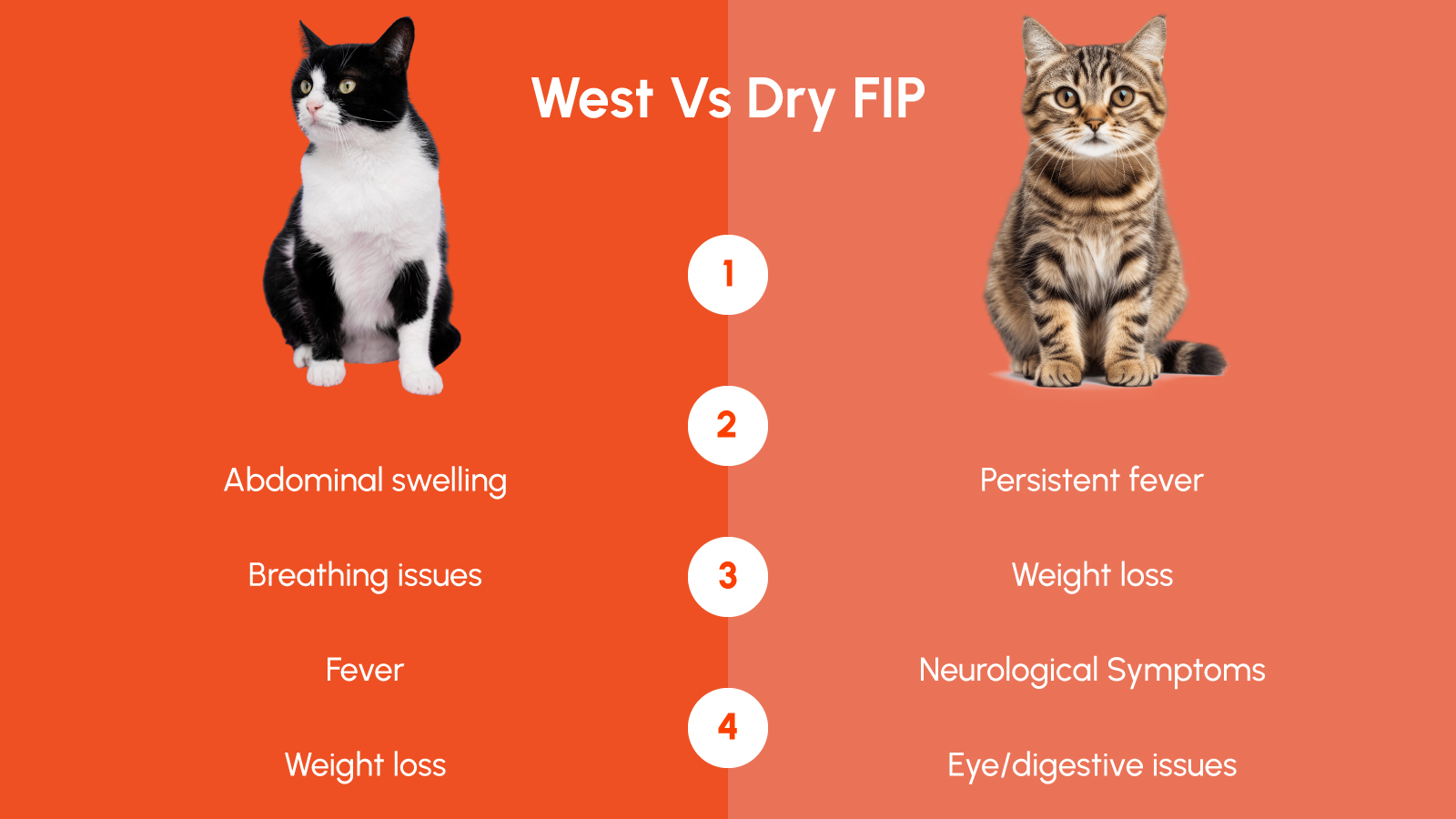
FIP commonly presents in two clinical forms:
- Effusive (Wet) FIP: Characterized by the accumulation of fluid in body cavities such as the abdomen (ascites) or chest (pleural effusion), often leading to labored breathing or a distended abdomen.
- Non-effusive (Dry) FIP: Presents with granulomas and inflammatory lesions in organs such as the liver, kidneys, eyes, and central nervous system, without the presence of fluid accumulation.
What makes FIP especially challenging is its overlap with other feline diseases. Symptoms like lethargy, fever, weight loss, and fluid accumulation can mimic other illnesses, complicating the diagnosis without molecular testing.
Why Choose the VetFor FIP Detection Kit?
Traditional methods of diagnosing FIP often rely on a combination of clinical signs, fluid analysis, and imaging but these are not definitive. The VetFor Detection Kit eliminates the guesswork by directly detecting the viral RNA through fluorescent real-time PCR (RT-PCR) technology.
✅ High Sensitivity and Precision
With a detection limit of just 100 copies/mL, the VetFor kit ensures the virus can be identified even in the early stages of infection when viral loads are low. This sensitivity helps initiate timely treatment decisions.
✅ High Specificity
Cross-reactivity is a common issue in many diagnostic tests. However, the VetFor kit demonstrates no cross-reactivity with other common viruses such as Rotavirus, Canine Parvovirus, or Feline Coronavirus Type I, significantly reducing false positives.
✅ Fast Turnaround
The kit is optimized for speed without compromising on accuracy. From sample preparation to result interpretation, the process is streamlined for efficiency, making it ideal for busy clinics and diagnostic labs.
✅ Comprehensive and Easy-to-Use Components
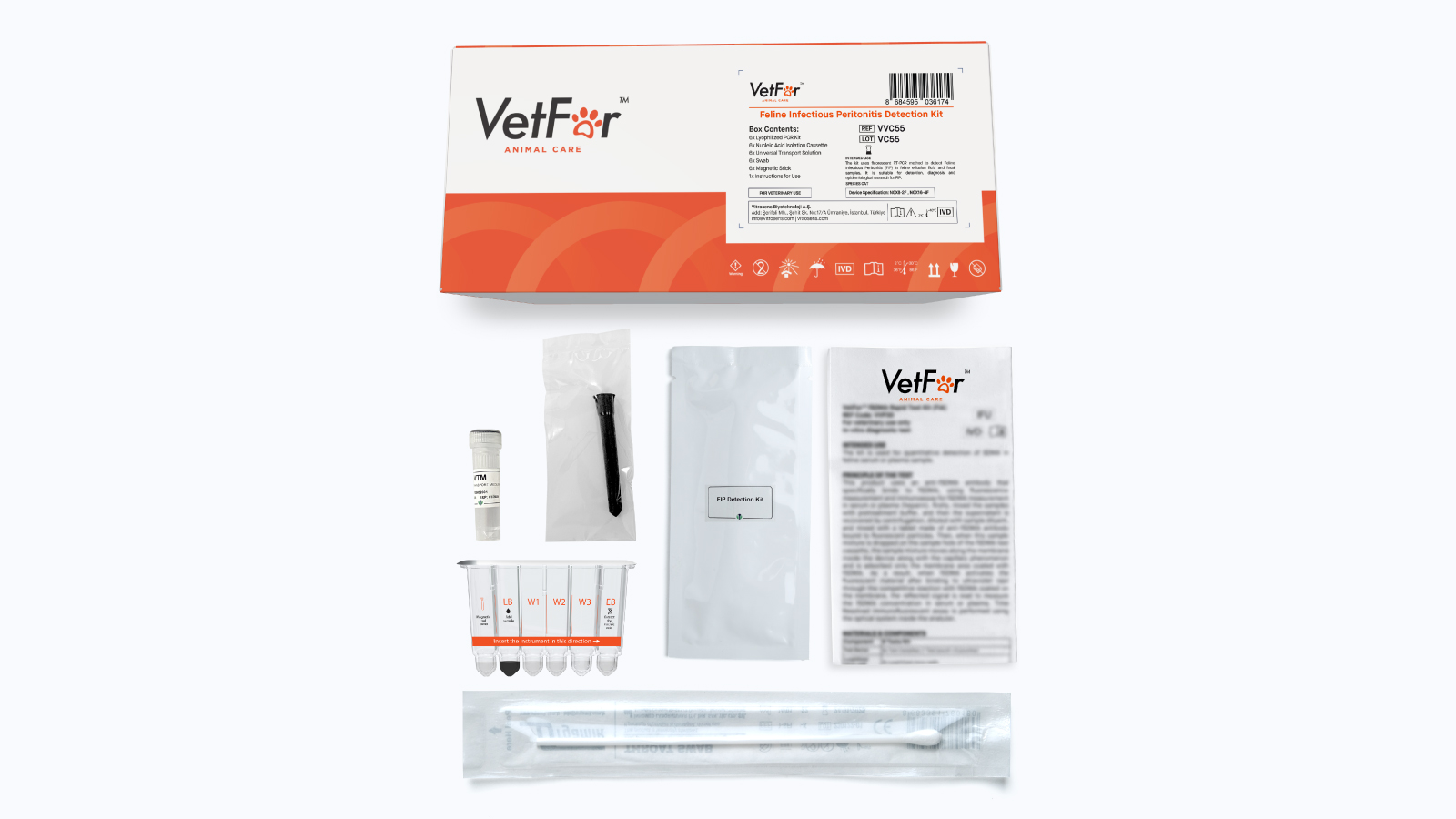
Each kit includes all the essential tools for sample collection and analysis:
- Nucleic acid extraction reagent
- PCR freeze-dried reagent
- Magnetic rods
- Disposable sampling swabs and tubes
- Sample preservation reagent
- Detailed instructions for use
How the VetFor Kit Works: PCR in Action
At the heart of the VetFor kit is reverse transcription polymerase chain reaction (RT-PCR), a trusted and gold-standard method for detecting RNA viruses.
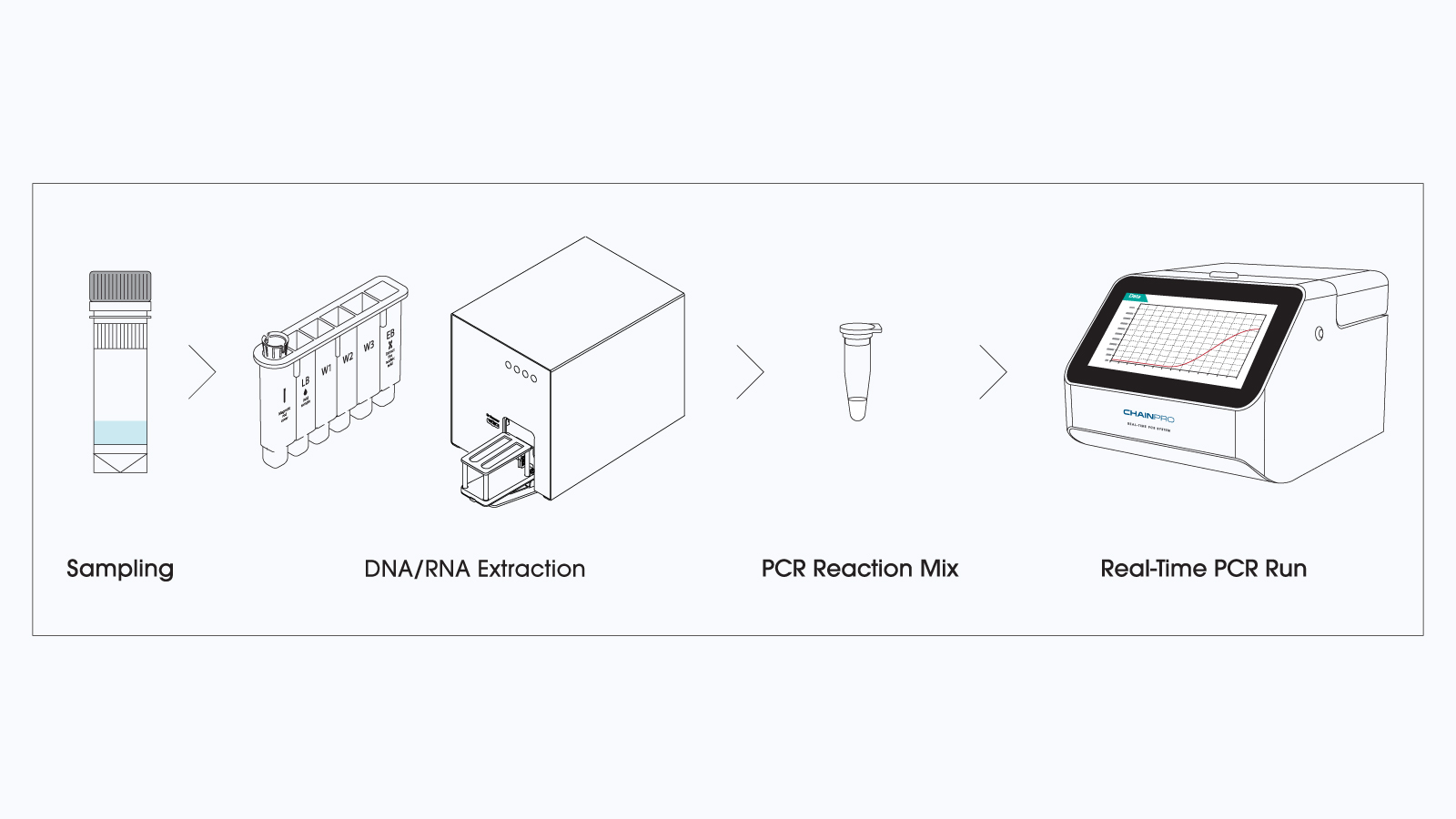
- Sample Collection: The kit supports a wide range of sample types including:
- Liquid samples: blood, ascites, pleural effusion
- Swab samples: fecal, anal, nasopharyngeal, and ocular swabs
- RNA Extraction: Using the included reagents and magnetic rods, RNA is isolated from the collected samples.
- Reverse Transcription and Amplification: The RNA is reverse-transcribed into complementary DNA (cDNA), which is then amplified using Taq polymerase and fluorescent-labeled probes.
- Fluorescence Detection: The PCR instrument measures fluorescence signals to determine the presence of the FIP virus.
Interpretation of Results:
- Positive: Ct (Cycle threshold) value < 38 with a clear S-curve in the FAM channel.
- Negative: No Ct value or Ct ≥ 38.
- Internal Control: Confirmed by a valid curve in the HEX channel.
The results can be read using popular PCR systems including the Biorad CFX series, Roche Lightcycler, Quant Studio, and ChainPro NGX16-4F, making the kit compatible with most veterinary diagnostic labs.
Sample Handling and Storage
Proper sample handling is critical to the accuracy of molecular testing. The VetFor™ kit is designed with practical storage and preservation in mind:
- Samples can be stored temporarily at 4°C or long-term at -20°C to -80°C.
- Preservation reagents are provided to maintain RNA integrity during transportation and processing.
Whether you’re working in a field hospital, a university lab, or a busy urban veterinary clinic, the VetFor kit fits seamlessly into your diagnostic workflow.
Empowering Veterinary Professionals with Better Tools
The VetFor FIP Detection Kit is more than just a diagnostic tool, it’s a solution for better veterinary care. By providing fast, clear, and actionable results, this kit empowers veterinarians to:
- Make early and accurate treatment decisions
- Reduce unnecessary testing and procedures
- Increase confidence in diagnosis
- Contribute to epidemiological tracking of FIP outbreaks
Compliant with European Medical Device Regulations, the VetFor kit is approved for professional in-vitro diagnostic use.
Feline Infectious Peritonitis is no longer the mystery it once was. With reliable diagnostic tools like the VetFor FIP Detection Kit, veterinary professionals now have the clarity and confidence needed to diagnose this challenging disease swiftly and accurately. Combining high sensitivity, ease of use, and compatibility with standard equipment, the VetFor kit is a must-have for every veterinary practice serious about feline care.
References
- Pedersen, N. C. (2014). An update on feline infectious peritonitis: diagnostics and therapeutics. Veterinary Journal, 201(2), 133–141.
- Addie, D. D., et al. (2009). Feline infectious peritonitis: ABCD guidelines on prevention and management. Journal of Feline Medicine and Surgery, 11(7), 594–604.
- Kipar, A., & Meli, M. L. (2014). Feline infectious peritonitis: still an enigma? Veterinary Pathology, 51(2), 505–526.